

Introduction
“I want to say the R500 is not a scary car to drive,” says Dan Webster, his Brummie tone betraying a mischievous glint. “But it probably will be scary the first time you drive it.”
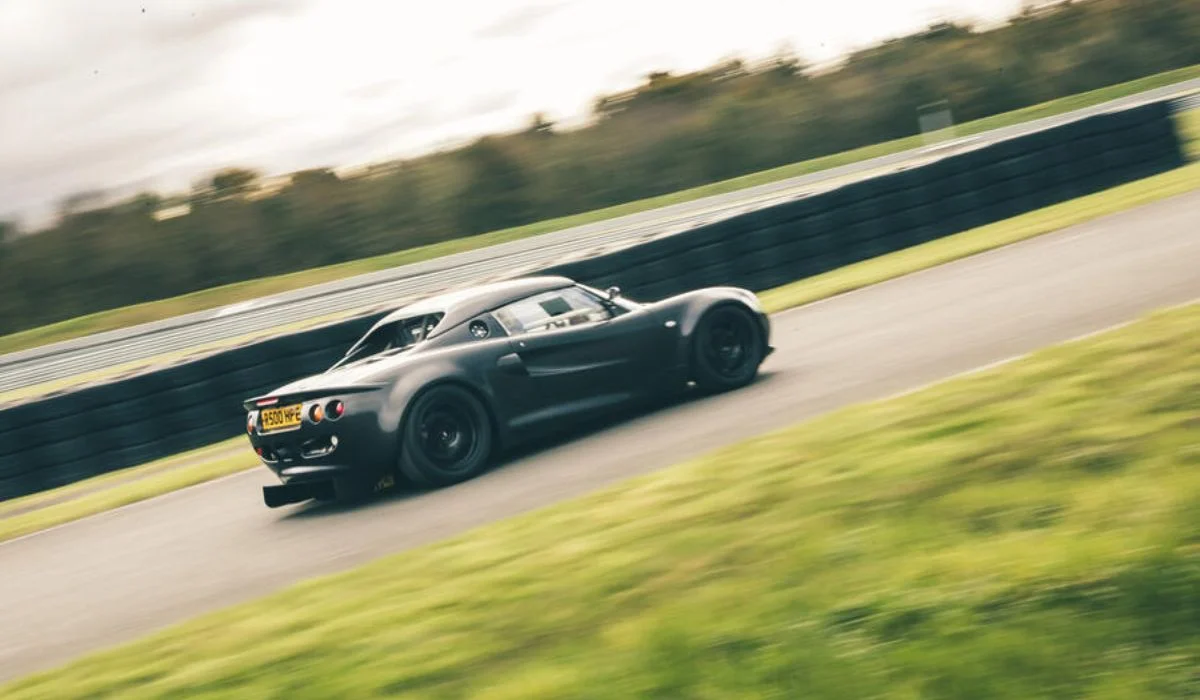
The deadpan delivery is enough to make me laugh, but also to pause. Webster, the man behind Bromsgrove‑based High Performance Engineering, has built something extraordinary. With a McLaren F1’s power‑to‑weight ratio and a wheelbase shorter than a VW Up, the heartbreakingly expensive R500 is no ordinary Elise. It is a machine designed to thrill, terrify, and redefine what a lightweight sports car can be.
Engineering Obsession
At first glance, the R500 looks like a familiar Lotus S1 Elise. But beneath the carbonfibre bodywork, 80% of the car is bespoke. Polycarbonate windows, a plumbed‑in fire extinguisher, bladed anti‑roll bars, carbon‑carbon brakes, and a motorsport‑grade power‑distribution module all speak to Webster’s obsessive engineering.
The rose‑jointed suspension is entirely new, the brake system re‑engineered with dual master cylinders and a racing‑style bias bar. Every detail has been reconsidered, every weakness eliminated.
Webster himself is a Burt Munro‑type character: a former prison architect turned engine tuner, now selling synaptic overload and diamond‑edged driving pleasure to those who know what they’re doing in a track car.
The Honda Heart
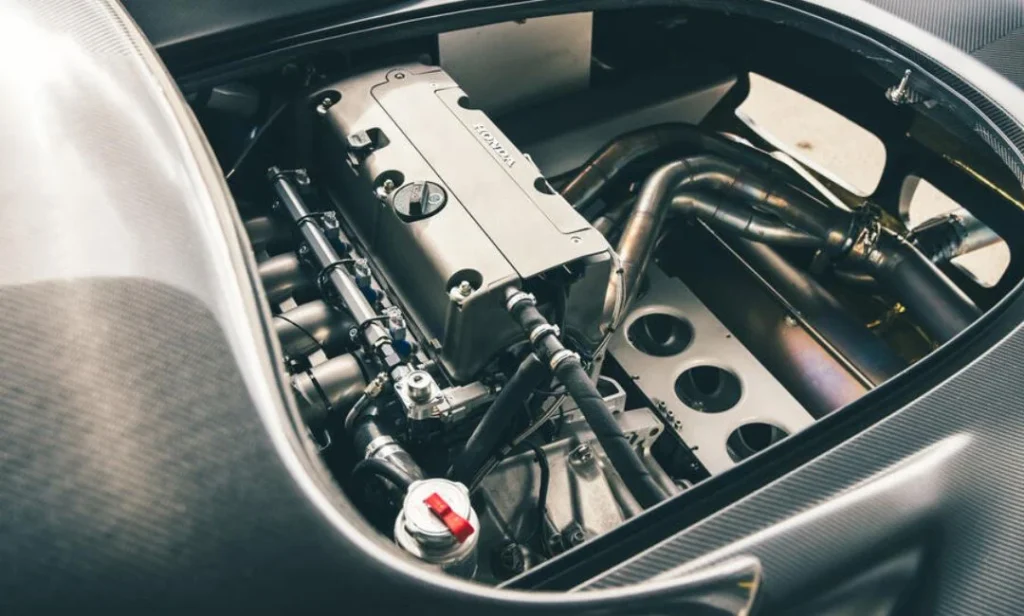
The R500’s engine is built from the bones of Honda’s K20 unit, bored to 2.2 litres and running at 13:1 compression. It features a lightweight steel crank, forged rods and pistons, individual throttle bodies, and valve lift figures more akin to a V10 F1 engine.
The flywheel weighs just 1,100g — a third of the standard part — and combined with a twin‑plate clutch, the whole assembly tips the scales at 83kg. The result is an engine that spins to 10,000rpm with terrifying ease, theoretically capable of 11,000.
Webster insists it will take wide‑open throttle at 1,500rpm in sixth gear. Spoiler: it does.
Climbing In
Folding yourself into the R500 is no small feat. The T45 steel roll‑cage narrows the aperture, but once strapped into the Tillett seats the sensation is pure motorcycle: the car becomes an extension of your body.
The billet‑aluminium gearshift, the TFT display perched on a machined plinth, the ignition primed via a smart bank of controls — it all feels more prototype racer than road car. The Momo steering wheel, borrowed in spirit from Lotus’s 1994 F1 effort, brings the K20 to life with a button press.
And then the Elise illusion vanishes. The fizzing energy of the R500’s powertrain makes a GT3’s single‑mass flywheel feel tame. Upshifts demand only a half‑lift of the throttle; downshifts reward heel‑and‑toe artistry. It’s vindictive, visceral, and utterly intoxicating.
On Track
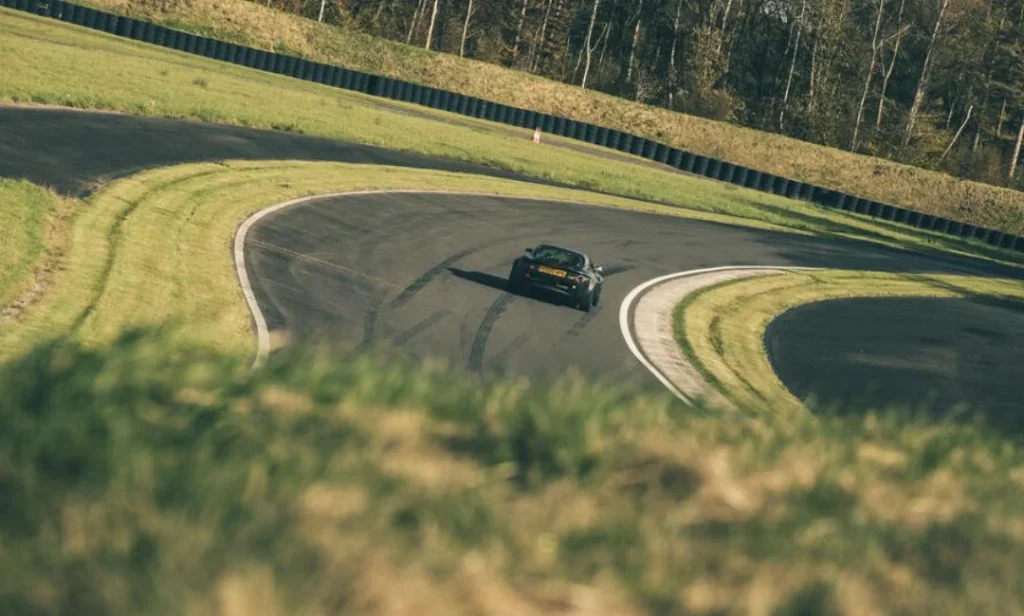
The first laps are a battle. Carbon brakes need heat, the plated LSD demands commitment, and until the tyres warm the nose ploughs wide. Lock the brakes and the R500 doesn’t screech — it smokes, white plumes curling over the windscreen like a touring car.
Is it scary? Yes, but not in the way Webster teased. The fear lies in respecting an engine so blueprinted, so finely honed, that you hesitate to unleash it. Yet that’s exactly what it craves: a proper beasting.
Every car has a “clicking point” where inputs dissolve into instinct. In the R500, that point sits high — beyond nine‑tenths, beyond comfort. Only when driven like it’s the last thing you’ll ever do does the madness make sense. Only then does the £375,000 price tag begin to feel, perversely, justified
Sensory Overload
Red‑line upshifts at 9,500rpm are addictive. Each shift delivers 20mph in a blink, the noise from the carbon airbox reverberating against a gold‑lined bulkhead. Webster admits he wanted the R500 to sound like a touring car, and it does — violently, gloriously so.
The gearbox blends the theatre of a sequential with the engagement of a Group 5 historic H‑pattern. The chassis, softened for today’s test, remains supple and precise, steering on throttle with kart‑like joy. It’s not benign — damp conditions would punish the unwary — but the balance is fundamentally sound.
Driving the R500 is less about lap times than sensory overload. It’s raw, grainy, intense — a prototype racer distilled into 620kg of carbon and steel.
The Cost of Obsession
HPE will offer lesser versions — the R400 and R300 — without the carbon body, roll‑cage, or dog ’box. But none will be remotely affordable. The R500’s year‑long build time and £375,000 price tag put it in rarefied company: Manthey‑tuned 911 GT3 RSs, or half a grid of Radical SR1s.
It is, undeniably, huge money. Scary money. Yet the R500 is not about rationality. It is about one man’s tribute to obsession, to raw thrills, to the idea that a Lotus Elise can be reborn as a superbike on four wheels.
Specs: HPE Special Vehicles R500
- Engine: 2.2‑litre Honda K20, 4‑cyl petrol
- Power: 330bhp @ 9,000rpm
- Torque: 205lb ft @ 8,600rpm
- Gearbox: 6‑spd manual dog ’box
- Kerb weight: 620kg
- 0‑60mph: 3.0sec (est)
- Top speed: 165mph
Verdict
The R500 is not a car. It’s a prototype racer disguised as one, a superbike with indicators, a £375,000 experiment in engineering obsession. It demands commitment, rewards bravery, and redefines sensory overload.
For those who can afford it — and who dare — the R500 is a once‑in‑a‑lifetime experience. For everyone else, it remains a legend whispered in pit lanes: the Elise that became a monster.
